CJC-1295 dosage numbers came from early research
Researchers gave set amounts to people and mice. They didn't establish a safe amount or timing for treating anyone.
Early CJC-1295 studies chose amounts to watch blood changes
Scientists at ConjuChem, a drug company, made CJC-1295 to lengthen a brief growth message. Researchers chose set amounts so they could watch how long blood hormones changed.
Each healthy adult received one injection into the fat just below the skin. The study amounts were 30, 60 or 90 micrograms per kilogram [1][3].
Think of a microgram as a millionth part of one gram. Per kilogram means each amount changed with body weight; it doesn't give you a personal dose.
A mouse study used 2 micrograms at a time. The mice got shots every 24, 48 or 72 hours [6].
The shortest gap restored normal growth in those mice. Longer gaps worked less well, but a mouse result can't set a plan for you.
These figures describe research, not medical advice. No study turned them into an approved treatment amount.
Online posts give 100 to 300 micrograms for either the short drug or the pair. The cited human report did not test those online figures [1].
CJC-1295 isn't approved for people [7]. No amount has been accepted for treating any illness.
Human care has no approved CJC-1295 amount
The early human tests used 30, 60 or 90 micrograms per kilogram [1][3]. Researchers watched blood hormones after a single shot.
They weren't testing a dose for routine care. Plans shared online haven't been proved in a study that compared treatment groups [7].
The human studies used shots just under the skin
The stomach would break this peptide apart before much reached your blood. The researchers therefore put CJC-1295 into fatty tissue right below the skin [1].
In older work, scientists put your body's natural hormone message straight into a vein [9]. A CJC-1295 peptide this size doesn't reach your blood well when swallowed [2].
Blood tests showed 5.8 to 8.1 days passed before half the DAC drug was gone [1]. That time tells how slowly it left, not whether it was safe.
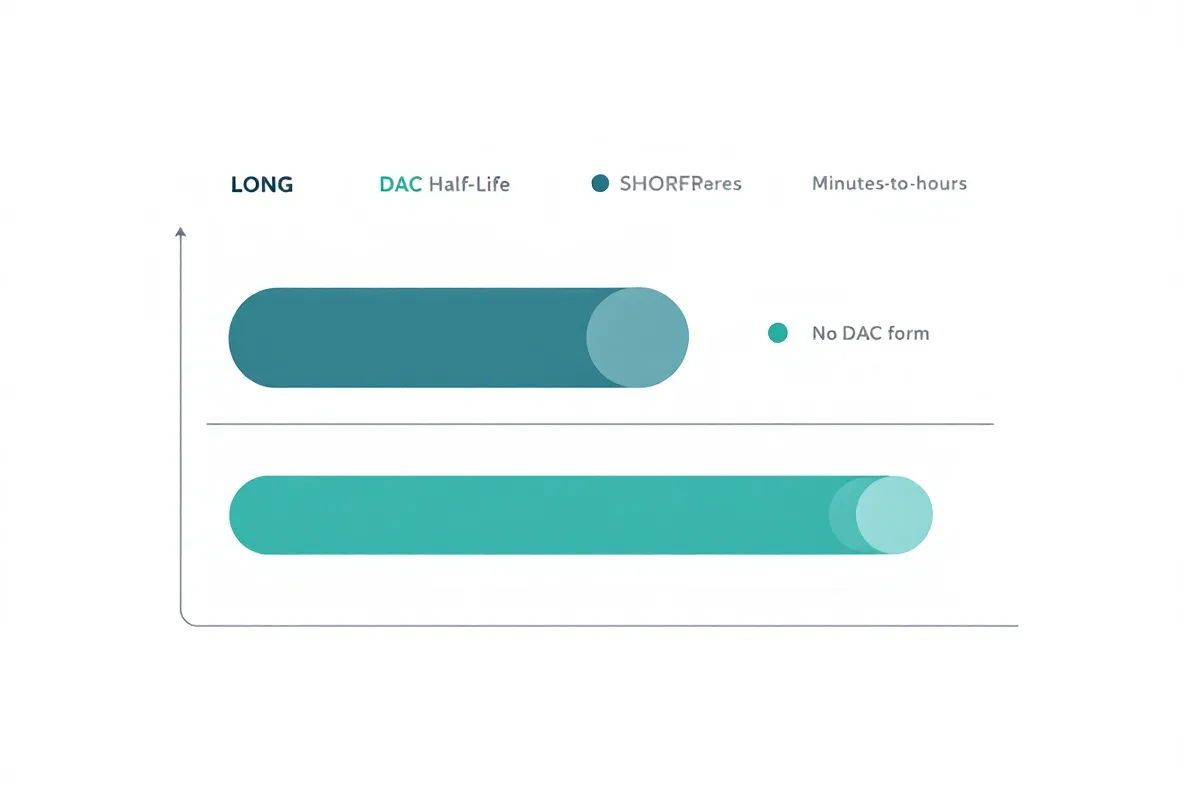
After repeat DAC shots, IGF-1 remained high for up to 28 days. Modified GRF (1-29), the short form, lasted only minutes or hours [8].
Those forms can't share one schedule. The hooked form remains for days, while the unhooked form leaves far sooner.
For lab work, workers added germ-free water to the dry powder, then stored it cold [1][2]. Those details describe a lab step, not home use.
The study placed the shot beneath the skin
The study team gave the shot into that shallow layer [1]. That tells you what researchers did and nothing more.
CJC-1295 isn't approved for you or anyone else. A route used in research isn't a direction for your care.
The powder was mixed only for lab work
The workers used germ-free water for the dry powder and stored it cold [1]. That information belongs to the study lab.
The drug isn't approved for human use. Knowing how a lab handled it doesn't make a home product safe.
Time between shots changed the result in mice
ConjuChem designed the CJC-1295 DAC form to remain in blood for days. A mouse study then showed that spacing the shots changed growth.
Each mouse got the same 2-microgram amount. Shots every 24 hours restored growth, while 48- and 72-hour gaps worked less well [6].
Those mice were born without their normal brain hormone order. Their result can't set a schedule for you.
In human volunteers, one DAC shot raised the growth hormone your body makes for several days. IGF-1 remained high past one week [1].
After repeat shots, the IGF-1 reading had not returned to its first level, even at 28 days. The study measured the hormone, but didn't report how much drug remained before each later shot.
The short no-DAC form can leave within hours. Online groups discuss giving it more often [8], but those posts don't prove safe timing.
Online plans weren't tested by comparing groups under set rules. They also have no approval for human care.
Only a few early studies gave CJC-1295 to people, and the longer testing program stopped [1][7]. The drug still isn't approved for people [7].
No human study has set an amount or timing for the drug pair
ConjuChem studied CJC-1295 alone before people began pairing it with another drug. CJC-1295 and ipamorelin are discussed together far more often than scientists have tested them together.
Ipamorelin is made in a lab and reaches your growth gland by another route. With CJC-1295, the pair can produce a bigger hormone release than either drug alone [11].
That body response gives researchers a question to test; it isn't a treatment plan. No human study has set how much of each drug to give or how long to wait [11].
Other plans posted online have this gap too. Early human work used 30 to 90 micrograms per kilogram only to track hormone timing [1][3].
Researchers didn't test long use for better health or safety. The studies tracked the drug's time in blood and the hormone response.
Each amount belongs to the one study that used it. A research figure isn't advice for you [7].
For the timing difference, read the CJC-1295 DAC and no-DAC comparison. Neither form has an approved schedule your doctor can use for you.