CJC-1295 changed blood hormones for several days
Small studies checked blood tests, not better sleep, strength, weight, or safety over many years.
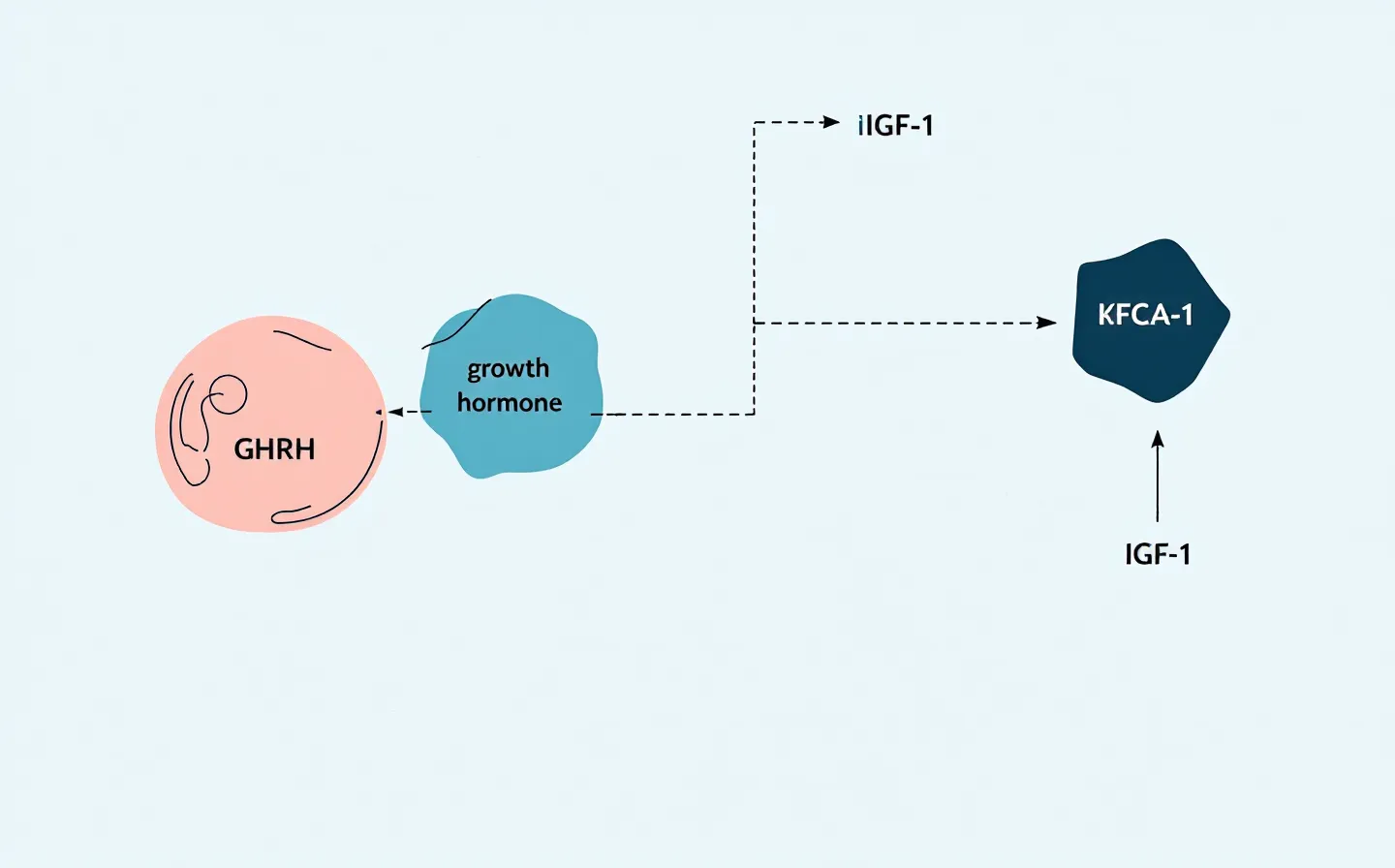
CJC-1295 changed blood tests but didn't prove better health
A drug company named ConjuChem made CJC-1295 so a brief brain message would last longer. The first tests found lasting hormone changes, but no clear health gain.
The CJC-1295 drug copies an order sent to the growth gland, a pea-sized organ below the brain. Your gland answers by putting growth hormone into your blood.
In one small study, one shot was given to adults in good health. Their growth hormone rose, along with IGF-1, a hormone made by the liver [1].
Blood tests showed that 5.8 to 8.1 days passed before half the long-form drug was gone, meaning half the drug itself, not half its strength or half the volunteers. That CJC-1295 result tells you how slowly the drug left, not whether anyone felt healthier.
The body's message is built from 29 amino acids, the small parts of a peptide. Scientists changed four of those small protein parts so the copy would break down more slowly [2].
The long form also catches albumin, one of the proteins in your blood, with a small chemical hook. Albumin carries the drug for more time [2], so its blood effects can last for days.
Researchers measured two hormones, growth hormone and IGF-1. This IGF-1 reading didn't show whether CJC-1295 improved your sleep, strength, weight, or day-to-day health.
Large studies haven't followed people like you for years. The longer testing plan stopped, and CJC-1295 isn't approved for people in any country [7].
Read the findings in adults and why the two forms aren't alike for the main facts. You can also see the amounts used only in studies and the unanswered safety concerns.
The source list lets you check each cited fact. Reports from people using the drug are kept separate from results found in a planned study.
The full CJC-1295 name tells you which form it is
ConjuChem, the company behind the drug, wanted a peptide that stayed longer. A peptide consists of small protein parts linked in a row, and researchers handled this one as dry powder [1].
One report lists the dry powder at 3,368 daltons, a lab unit for tiny weights [2]. That number tells you nothing about whether the product could help or harm you.
CJC-1295 is used as a name for two forms. Since they leave your blood at very different speeds, the rest of the name matters.
DAC is short for drug affinity complex, the name given to a small chemical hook. The hook lets the long form attach to albumin, one protein carried through your bloodstream.
Once in your blood, the no-DAC form has no hook. Your body clears it far sooner [8], so a time given for the long form won't fit it.
Both forms tell the gland below your brain to send out hormone already stored in your body. Neither one supplies growth hormone from outside your body.
CJC-1295 also isn't a steroid. Steroids work through your body's sex-hormone system, while this drug starts a growth-hormone message.
The results from human studies show what blood tests found after a shot. Those results still don't prove a benefit for you.
Five plain answers about CJC-1295
The five points below cover facts that may shape your choice. The FDA and sports answers explain the public rules in more detail.
CJC-1295 was built to resist quick breakdown
The drug repeats an order that your brain normally sends to the growth gland. Scientists changed four small protein parts so your body would clear the copy more slowly [2].
A hook on long-form CJC-1295 catches a protein in your blood. In an early study, IGF-1 and another hormone then stayed high for days [1].
Healthy adults had hormone changes after one shot
CJC-1295 made the gland send growth hormone out in its usual bursts [3]. The liver then made more IGF-1, a second hormone seen on a blood test.
After one week, the IGF-1 reading was about 45% above its starting point [3]. That rise can't tell you whether anyone felt better or what amount would be safe.
CJC-1295 and steroids use different hormone systems
CJC-1295 gives your growth gland the order to send out stored hormone [2]. A steroid acts through the sex-hormone system, not through that growth-gland message.
The CJC-1295 studies measured growth hormone and IGF-1, not male sex hormones. They can't settle a claim about steroid-like effects.
The FDA hasn't approved CJC-1295 for people
CJC-1295 isn't approved for human use. The FDA also refused to let pharmacies use it as the main ingredient in a drug mixed for one patient.
An FDA group reviewed that pharmacy use in 2024 and didn't support it [13]. The group raised a possible immune reaction and other safety worries.
Modified GRF (1-29) is the short form
In this name, GRF means growth hormone-releasing factor, the brain's order to the growth gland. Modified GRF (1-29) lacks the albumin hook, so it leaves blood much faster [8].
Only the DAC form can attach to albumin and stay for days. Check CJC-1295 DAC vs no-DAC and Modified GRF (1-29) before using a time from either form.
CJC-1295 studies found brief clues, not a health benefit
ConjuChem, the company that made CJC-1295, copied a natural brain order. Sermorelin is a shorter-lasting copy; tesamorelin is approved for extra belly fat in some adults with HIV, but CJC-1295 isn't [12].
The long DAC form leaves blood far more slowly than your body's own message. Researchers found that half of the drug still remained after 5.8 to 8.1 days [1][2].
One shot raised average growth hormone 2- to 10-fold in healthy adults. IGF-1, a liver-made hormone, rose too, but the study checked blood rather than how you felt [1].
Healthy young men had about 45% more IGF-1 after one week. Their growth hormone still arrived in the usual bursts their bodies use [3].
Rats released 4-fold more growth hormone after the DAC form. Since rats aren't people, that finding can't promise a benefit for you [2].
No large human study has proved better health or safety over years. A Phase 2 trial, an early test in patients, stopped before the drug gained approval [7].
The FDA won't let pharmacies use CJC-1295 as the main powder in mixed drugs [13]. Tested athletes also face a ban from the world sports drug authority [15].
Here are the exact limits: the human groups were small, the tests tracked hormones, and the later trial stopped. The human study details show why those facts don't add up to a health promise.